
First Saturdays
Reimagining Kenya, one conversation at a time

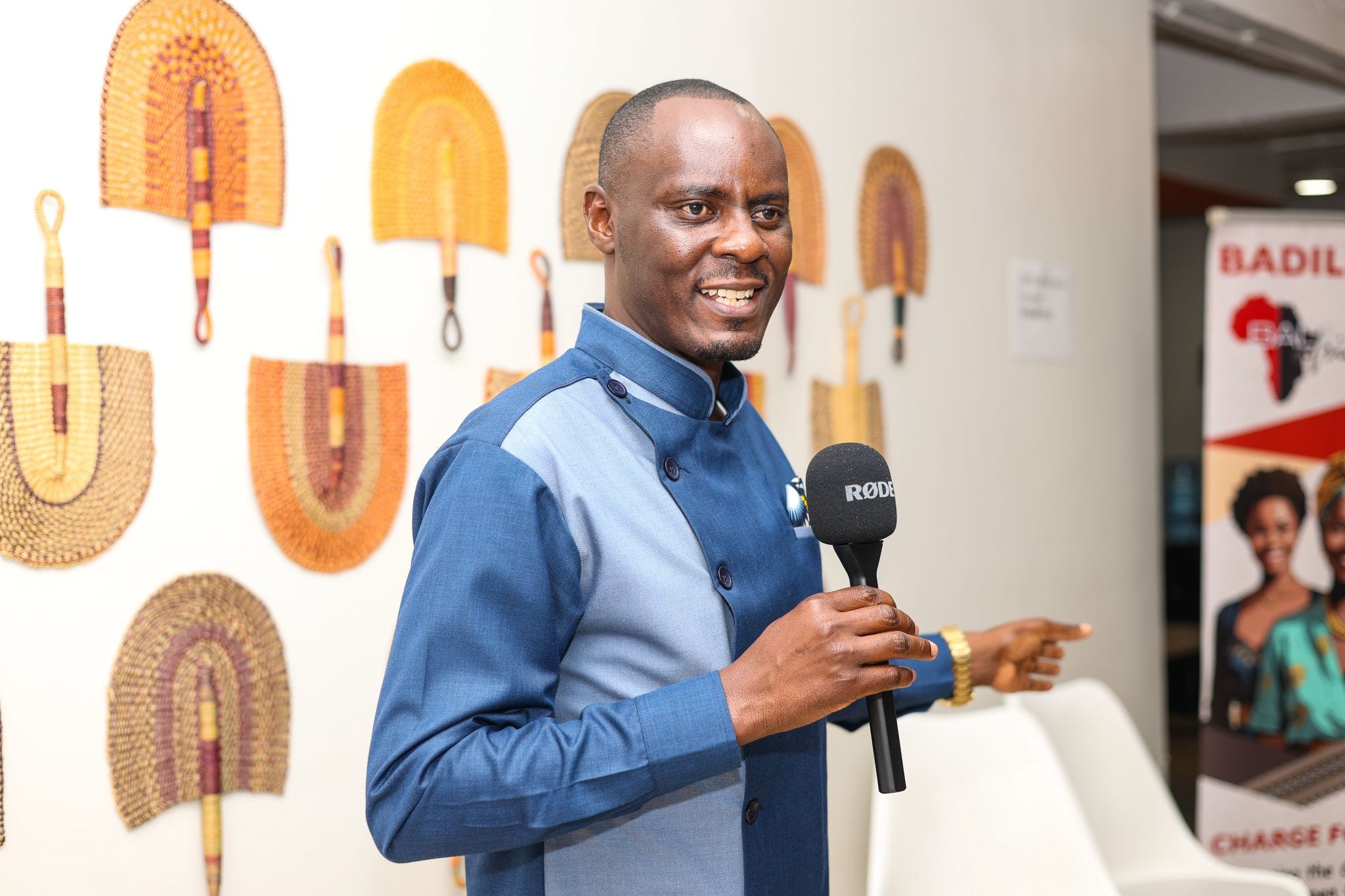
As you probably know by now, I love conversations, and I admire the people who know how to create the conditions for meaningful ones, who sense what a community needs, who prepare the ground so that insights can appear, and who weave together dialogues. Kenya has some such people, and one of them is Emmanuel Dennis, ED, my dear friend and young(er) African brother whom I met more than fifteen years ago (when he came to Sweden to work as a young leader).
Since then, ED has built a remarkable practice around dialogue, community, and change. Twenty years ago he founded GreenTeams to harness the energy of African youth and channel it into sustainability solutions. In 2015, he created another platform, The FirePlace Kenya, as a civic space for open exchange. It created a room for difficult questions, for calm reflection in tense moments, for connecting people who rarely meet. During Kenya’s disputed 2017 election, The FirePlace issued a public call for a more inclusive national conversation, urging leaders to acknowledge the deep fractures emerging at the time. And during the Gen Z protests in 2024, it stepped forward again by bringing together older leaders in their thirties and forties to support the young protesters on the front lines.
This year, something new began to sprout from all that earlier work. ED and the FirePlace joined forces with Badili Africa, a Pan-African women’s rights organization working to strengthen leadership and political participation by centering the voices of grassroots women and young people.
Together they launched FirstSaturdays, a monthly gathering where an unexpected mix of Kenyans meet in one room. Policy thinkers and political professionals. Chama women leaders. Women political mobilizers. Gen Z firebrands. Millennials. Industry professionals. Community organizers. Entrepreneurship enablers. And plenty of policy nerds. Groups that rarely sit together are invited to talk honestly about Kenya, its possibilities, its frustrations, and the country they want to build.
The invitation says it plainly: First Saturdays is a fresh bold space where grassroots meets boardroom, passion meets policy, and dreams for a better Kenya come alive. “Be part of the conversation. Let’s reimagine Kenya together.”
The first meeting took place a few weeks ago. For three hours on a Saturday morning, a civic commons began to take shape. The format is simple. A theme is introduced, sometimes with a pointed question or a provocation, and then the room opens. Conversations are unfiltered, people speak from experience rather than from talking points. No credentials needed, only presence, curiosity, and the willingness to listen.
What stands out is the diversity of the circle. Kenya’s political culture often follows predictable lines of age, class, tribe, gender, geography, and party identity. FirstSaturdays tackles that pattern: a young activist sits next to a seasoned policy advisor, a grassroots womam leader shares a moment of clarity with a business executive. People who normally pass each other in silence spend hours eye to eye.
There is something powerful in that. Kenya, like many countries, faces real stresses. Economic pressure, climate impacts, youth disillusionment, structural inequality. Many feel unheard, and politicians don’t engage. Many feel that the public conversation is overheated at times and hollow at others. A space like this offers another pattern. A way to speak without fear, to listen without performance, and to explore what national belonging might mean.
ED’s experience across youth movements, environmental initiatives, policy work, and community leadership gives him an unusual ability to hold such a space. Badili brings its deep grounding in women’s rights, civic education, and grassroots political agency. Together they are creating a room that feels like a small but meaningful shift in the country’s civic landscape.
First Saturdays is young. It is small. It is local. And it matters. Because in a world where public life is becoming more polarized and more fragile, spaces like this help hold something essential. They nurture the habits that sustain a democracy: listening, thinking together, and remembering that a country is shaped by those who show up.